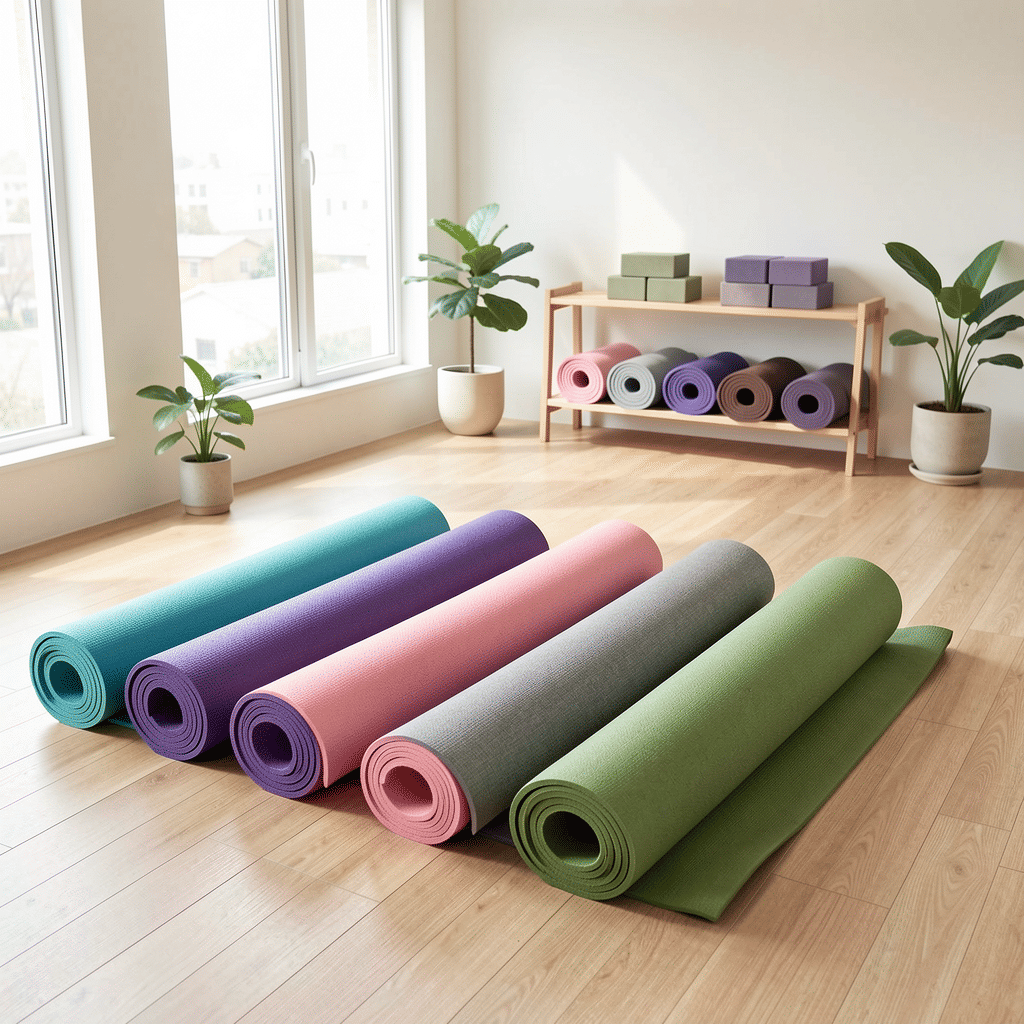
Embarking on your yoga journey requires not just dedication, but the right tools to enhance your practice. One of the most essential tools is a yoga mat. It serves as your personal sanctuary during practice, offering comfort, stability, and a connection to yourself and the ground beneath you. However, with the plethora of options available, choosing the ideal yoga mat can be overwhelming. This guide aims to simplify the selection process by exploring key factors to consider, ensuring you find a mat that meets your individual needs and preferences.
Understanding Your Yoga Practice
The first step in selecting the perfect yoga mat is to consider the type of yoga practice you engage in. Different styles of yoga have varying requirements:
-
Hatha Yoga: Typically involves slower, more static poses. A mat with decent cushioning is beneficial for comfort during prolonged holds.
-
Vinyasa or Ashtanga Yoga: More dynamic and involves flowing sequences. A mat with outstanding grip is crucial to prevent slipping, especially when transitioning between poses.
-
Bikram or Hot Yoga: Practiced in a heated environment, you’ll need a mat that absorbs sweat well and maintains traction despite dampness.
-
Restorative or Yin Yoga: Focuses on relaxation and deep stretching. Opt for a thicker mat for additional support and comfort.
Key Features to Consider
-
Thickness and Cushioning: Mats generally range from 1/16 inch to 1/4 inch thick. Thicker mats provide more cushioning, which is great for floor poses and if you desire extra joint protection. However, thinner mats offer better stability for balance poses.
-
Material: Common materials include PVC, rubber, cork, and TPE (thermoplastic elastomer). PVC mats, while durable and sticky, might not be the most eco-friendly. Natural rubber and cork are both sustainable and offer excellent grip. Choosing a material that matches your environmental ethics and comfort preferences is important.
-
Texture: The texture of your mat influences its traction. Smooth mats might feel more comfortable underfoot, but can become slippery during intensive sessions. Textured mats offer enhanced grip, reminiscent of ribbed or dotted patterns, holding you steady as you deepen your practice.
-
Stickiness: A sticky mat helps you maintain alignment and holds your poses more easily, which is beneficial for beginners. Test the stickiness of a mat by stretching into different poses to ensure it meets your stability needs.
-
Portability: If you travel frequently or attend classes elsewhere, consider a lightweight, portable mat. Look for travel mats that are designed to be compact without compromising too much on comfort.
Personal Preferences and Style
-
Appearance: While functionality is key, finding a mat that you find visually appealing can enhance your practice by inspiring you and making you feel more connected to your routine.
-
Eco-Friendliness: If sustainability is important to you, consider a mat made from renewable resources such as natural rubber, jute, or cork. Eco-friendly mats are often biodegradable and don’t contain harmful chemicals.
-
Budget: Yoga mats range widely in price, from budget-friendly options to premium versions. Determine your budget beforehand to narrow down your choices while ensuring quality.
Conclusion
Selecting the perfect yoga mat is a personal journey that complements your unique practice and lifestyle. By considering the type of yoga you practice, the mat’s material, texture, thickness, and other features, you can find a mat that enhances your practice, supports your body, and aligns with your values. Ultimately, the right mat will feel like an extension of yourself, fostering a deeper commitment to your yoga journey and nurturing the harmony between body and mind. Whether you’re a beginner or a seasoned yogi, the perfect yoga mat awaits, ready to support every pose, breath, and intention on your path to well-being.